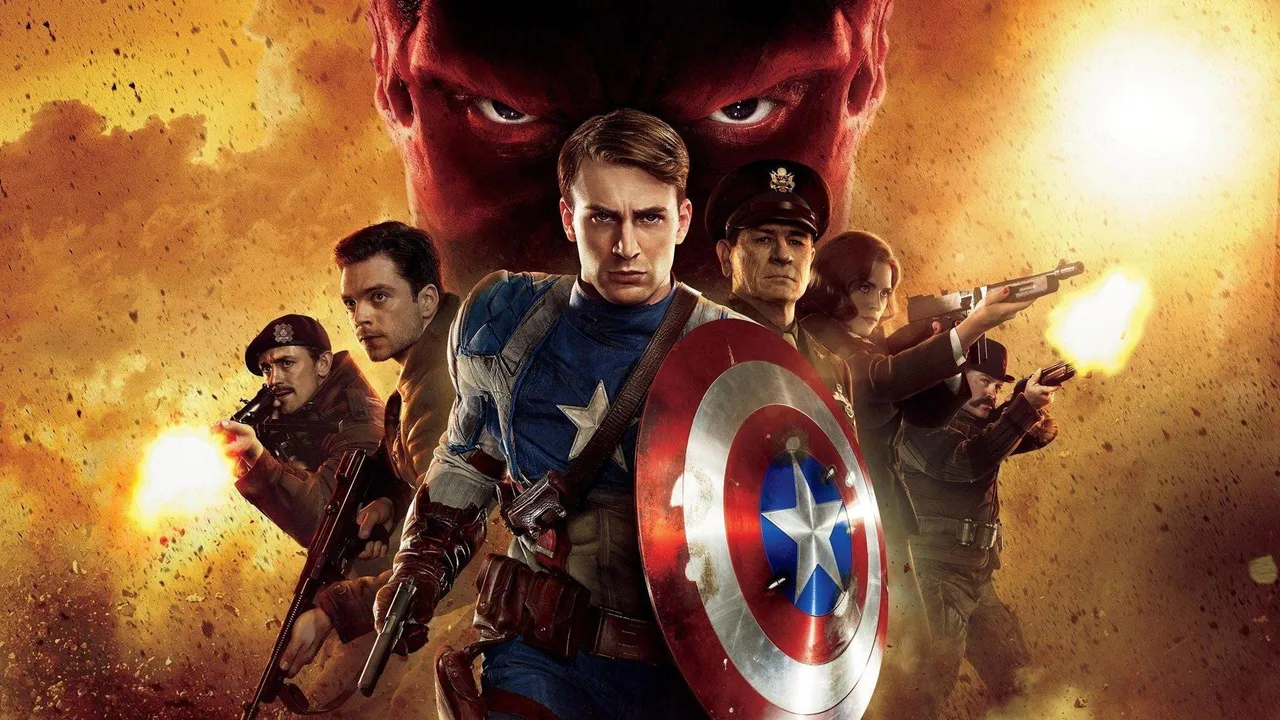
At the end of Avengers: Endgame, an old Steve Rogers sits on a bench and hands Sam Wilson the shield. It felt like the end. Then the final Avengers: Doomsday trailer opened with Chris Evans at home with Peggy Carter and a teenage son, and the oldest argument in the MCU started again: how many Steves are there, and did Marvel just undo Endgame?
Here is what the films actually say, what the people who made them said, and the theories worth knowing before December 18.
What Endgame showed
After the final battle, Steve returns the Infinity Stones and Mjølnir to the moments they were taken from, and stays in the past to live with Peggy. Back in the present, an elderly Steve passes his shield to Sam.
The rule the film sets up earlier matters here. Bruce Banner explains that changing the past doesn't change your own present, because the changes create alternate realities. The Ancient One adds the sharper version: take an Infinity Stone out of its timeline and you create a new branch.
The people who made Endgame disagree
You aren't the only one confused. The writers and the directors of Endgame gave different answers in 2019.
Screenwriter Christopher Markus told Fandango that returning a Stone creates no new timeline, so Steve living in the past doesn't either. "I do believe that there is simply a period in world history from about '48 to now where there are two Steve Rogers," he said, adding that one of them is frozen in ice for most of it.
The Russo brothers saw it differently. In a Q&A, they said the old Cap "lived his married life in a different universe from the main one," and had to jump back to the main universe to give Sam the shield.
So there were always two Steves. The open question was only ever whether the second one lived next door or in another universe. Doomsday is made by the Russos and co-written by Stephen McFeely, so both sides of that argument are in the room this time.
 Avengers: Endgame
2019
Banner's and the Ancient One's rules about changing the past, Steve's dance with Peggy, and the bench.
What the Doomsday trailer adds
The final trailer, released on November 23, spends most of its three minutes on Steve. According to ABC News, it opens with Steve and Peggy talking about telling their son who his father is. "Do you think that boy doesn't know who you are?" Peggy asks.
A bright flash interrupts them, and the Fantastic Four are standing in the front yard. "Are you Steve Rogers?" Reed Richards asks. Over shots from Endgame, including the case of Infinity Stones and Bucky watching Steve prepare to travel back, Steve says: "Years ago, we did what was needed to make the world right... but we didn't know those choices would have consequences." Then his son, played by Wesley Holloway, gets the line everyone is quoting: "Holy crap. Dad, were you a superhero?"
Three things follow from that. This Steve remembers the time heist, so he is our Steve, not a stranger with his face. He has had years with Peggy, long enough to raise a teenager. And the Fantastic Four, who come from another universe, Earth-828, knew where to find him.
From Loki's knock to the Fantastic Four's
Put the trailer next to the Endgame Encore and the timeline of Steve's second life starts to take shape.
The Encore scene comes first. The re-release extends the ending straight on from Steve and Peggy's dance, the same night, so Steve is the age he was when he went back. There is a knock. Loki, in his TVA uniform, is at the door, and Steve hides while Peggy answers. When she asks if she can help him, Loki says no, but that he can help them, both of them. Steve steps out, stunned, and the scene ends there. Anthony Russo has called it the moment "where Doomsday is born."
The trailer comes years later. Steve is older, bearded in some shots, and the baby seen in the flashbacks is now a teenager. Whatever Loki offered them, it played out somewhere in that gap. And when someone finally comes for Steve, it isn't Loki. It's the Fantastic Four.
And the bench comes last. The older Steve in the trailer sits neatly between the young man dancing with Peggy and the old man who hands Sam the shield. He is still aging normally, still on his way to that bench. That is the strongest sign Doomsday is adding to Endgame's ending, not replacing it.
So what did Loki help them with?
The films haven't said, but the gap points to a few readings:
- A safe place to live. Loki, who holds the timelines together, gives the family a branch or a universe where their life can exist without tearing anything. Some breakdowns go further and suggest he moved them to Earth-828, which would explain how the Fantastic Four found them so easily. That part is unconfirmed.
- Time. Loki knows what is coming for the multiverse, and his help buys Steve and Peggy the years they get in the trailer, before the bill arrives. Doom's talk of stolen lives that must be given back would be that bill.
- A warning, for later. Loki can't leave the timelines he holds for long. Telling Steve what is coming, and leaving others to fetch him, fits a god who sits at the End of Time.
Doom's "stolen lives"
The trailer gives Doom a line that makes the Steve question the center of the story. Over shots of him in his armor, he tells the heroes they have lived stolen lives, and that "now you must give them back."
Steve's life with Peggy is the clearest stolen life in the MCU. It exists because he used the time heist to go back for it. If Steve's own voiceover is right that those choices had consequences, his family may be one of them.
So is it a paradox, or a retcon?
Neither, strictly. A retcon changes something we were shown, and nothing in the trailers contradicts Endgame: Steve went back, lived a life, and old Steve still ends up on that bench. What Doomsday does is fill in the decades Endgame skipped, and show that they weren't as quiet as the bench made them look.
The paradox only appears if you assume everything happened in one timeline. With the writers' version, Steve's family would have been living in the main MCU world all along, which raises awkward questions about how nobody noticed. The Russos' branch version avoids that, and fits a story where Doom treats lives built through time travel as something to take back.
The four timelines, on a map
It is easier to see than to read. We drew all four versions, the two answers from the people who made Endgame and the two Doomsday theories, as an interactive map you can drag through and zoom, with every connecting movie in its place: the Steve Rogers timeline, mapped.
Has old Steve already lived through Doomsday?
Here is the strange part. The bench scene takes place in 2023, right after the final battle in Endgame. Doomsday is set years later, with Sam as Captain America leading a new team of Avengers. Yet the Steve the Fantastic Four fetch is middle-aged, decades younger than the man on the bench. A younger Steve is being pulled into a future that comes after his older self already said goodbye. There are two ways that works.
Yes: one Steve, one life
If Steve has a single life, it runs in this order: the dance, Loki at the door, raising his son, the Fantastic Four, the fight against Doom, then home again, old age, and finally the bench. In that version, the old man handing Sam the shield already remembers fighting beside a Sam who hasn't had that fight yet, and says nothing. It fits the writers' view that there is one world and the past can't be changed.
No: a different Steve
If the Russos are right and Steve's married life happened in another universe, the Steve in Doomsday doesn't have to be the one on the bench. He could be one of several branches, a Steve whose life split off the night Loki knocked, or a Steve whose story ends differently and never reaches the bench at all. By Endgame's own rules, nothing he does can undo the bench. It has already happened.
Will Doomsday explain the bench?
Endgame never explained how old Steve got there. He was supposed to return on the time machine platform five seconds after leaving. He didn't, and was found sitting by the lake instead, with no machine. Bucky seemed to know. Sebastian Stan has said that when he asked the Russos whether there should be more said between Bucky and Steve before the jump, they told him: "You know what's going to happen, you know what he's doing."
The writers' answer is that Steve simply lived the decades and waited. The Russos' answer is that he made one more jump back, but they never said how, without the platform. That gap is exactly the kind of thing Doomsday could close. Three ways it might:
- Loki gets him there. The God of Stories moves through time without Pym Particles or platforms. If Loki's offer of help includes a way home at the end, the bench needs no machine.
- Doomsday is why he missed the platform. The events of the film are what kept Steve from returning the normal way, and it ends with him going home to Peggy and growing old.
- The bench is the final shot. The Russos like endings that come full circle. Doomsday could close on Steve sitting down by the lake, the Endgame scene seen from his side.
The counterweight: Doomsday is only the first half. Avengers: Secret Wars follows in December 2027, and Marvel may save the bench for the true end of the saga.
The theories
It's Loki in disguise
The earlier trailers, where Thor reacts to Steve's return with disbelief, led fans to guess this Steve was a shapeshifting Loki variant. The final trailer makes that hard to believe. This Steve has a home, a wife and a son, and memories of the heist. In the Endgame Encore re-release, Loki does turn up at Steve and Peggy's door, years earlier and as a visitor offering help, not as Steve.
Steve's branch is part of the problem
If the Russos are right and Steve lived in his own branch, that branch is one more reality in a multiverse that is collapsing. It would explain why Loki, who now holds the timelines together, came to warn him, and why the war for the multiverse starts in his front yard.
Steve won't be Captain America
Sam carries the shield now, and Marvel's marketing has avoided calling Steve Captain America. Evans and Anthony Mackie have both hinted that Steve takes on the Nomad name from the comics, a hero without a country. That would leave old Steve's handover to Sam untouched.
The first Avenger becomes the last Avenger
Steve's nickname has always been the First Avenger, and the final trailer is built around him. Some fans think that is the point: when the multiverse falls apart, Steve is the last one standing, the hero who remembers how things were and helps put them back. Tony's story closed on "I am Iron Man", a callback to his first film. Ending the saga on the first Avenger would be the same kind of bookend.
If it happens, it probably isn't in Doomsday. GamesRadar reports that Chris Evans has confirmed Steve returns in Avengers: Secret Wars, though he won't say how much. A rumor that Doomsday is Evans's last appearance, with Steve sacrificing himself to keep his family out of Doom's reach, doesn't square with that. Steve also had no part in the 2015 Secret Wars comic, so whatever Marvel has planned for him is new. Our bet: no film called The Last Avenger, but a final scene in December 2027 that could earn the name.
For the full list of guesses, from Doom winning to the time heist causing the incursions, read our Avengers: Doomsday theories, or our final trailer breakdown.
What to rewatch
 Captain America: The First Avenger
2011
The dance Steve promised Peggy, and the plane he didn't walk away from.

- Avengers: Endgame
2019 · Encore re-release, 2026
The time heist, the bench, and Loki at Steve and Peggy's door.


Planning a full catch-up? Start with what to watch before Avengers: Doomsday.